
Your South Florida business now faces an average of 1,300 weekly cyberattacks. With attacks in the U.S. jumping 56% recently, the traditional “set it and forget it” security model has failed. Understanding what is managed detection and response (MDR) is no longer optional. It’s the difference between a resilient operation and a costly headline in an era of evolving ransomware.
We know you’re likely exhausted by the local IT talent shortage and the confusing alphabet soup of EDR and XDR. You need protection that works without the overhead of a massive in-house team. This guide simplifies the complex. We’ll show you how a human-led strategy provides the 24/7 vigilance your Miami enterprise requires to thrive in 2026.
You’ll discover the strategic ROI of outsourcing your defense and a clear path to implementation. We’re moving beyond simple software to build a “secure by design” future for your organization. Let’s explore how elite intelligence meets modern technology to give you back your peace of mind.
Key Takeaways
- Discover how MDR blends elite human intelligence with 24/7 technology to neutralize threats that automated software misses.
- Clear the confusion around security acronyms to understand what is managed detection and response (MDR) and how it differs from EDR and MSSPs.
- Address the South Florida IT talent shortage by integrating a dedicated team of experts into your business strategy.
- Learn why securing endpoints like your Xerox VersaLink or AltaLink series is essential for a complete defense in 2026.
- Identify the clear ROI of proactive protection and find a streamlined path to full implementation.
Defining Managed Detection and Response (MDR) for 2026
Static defenses are relics. In 2026, the digital perimeter has dissolved. You need more than a firewall; you need a strategy that breathes. Managed detection and response (MDR) is that evolution. It isn’t just a tool. It’s an outsourced security operations center that acts on your behalf. It transforms your security from a passive barrier into an active, living defense.
Many business owners ask what is managed detection and response (MDR) when they already have antivirus. The answer lies in the final word: response. Traditional security tells you there’s a fire. MDR sends the firefighters to put it out before the building burns. It combines sophisticated telemetry with the nuanced judgment of human experts. This fusion bridges the gap between automated software and human intuition. In the current landscape, relying on legacy detect-only models is a gamble you can’t afford to take.
The Three Pillars: People, Process, and Technology
Security isn’t a product you buy. It’s a discipline you maintain. A robust MDR strategy rests on three specific foundations that work in perfect harmony.
- People: We rely on elite analysts. They don’t just watch screens; they hunt. They spot the subtle anomalies that bypass even the best AI. These experts understand the context of your business operations and identify threats software might ignore.
- Process: When a threat emerges, seconds matter. We use pre-defined playbooks to contain incidents instantly. This ensures a consistent, high-speed defense every time, leaving no room for human error during a crisis.
- Technology: We deploy advanced tools across your entire network. This gives us a transparent view of every endpoint, from your cloud servers to your Xerox AltaLink devices.
Why 24/7 Vigilance is the New Standard
Cybercriminals don’t follow a business calendar. They strike at 3:00 AM on a Sunday because they know your internal team is likely offline. Modern ransomware can encrypt your data in minutes. Sub-hour response times are now the minimum requirement for survival.
Human-led hunting identifies these threats in their infancy. It stops the quiet phases of an attack, such as lateral movement or credential harvesting, before they turn into a loud catastrophe. This constant watch provides a level of resilience that automated alerts simply can’t match. You gain the freedom to focus on growth while our team focuses on the horizon. We ensure your digital assets remain protected while you sleep, eat, and build your legacy.
How MDR Works: From Threat Hunting to Remediation
Visibility is the bedrock of resilience. To protect your enterprise, we start with continuous data collection across your entire digital footprint. This includes every laptop, cloud server, and network switch. Advanced AI-driven analysis then processes these massive streams of telemetry. It filters out the daily noise of legitimate work to expose the subtle footprints of an intruder. This precision ensures that your security stays focused on genuine risks rather than chasing false positives.
Understanding what is managed detection and response (MDR) requires seeing it as a cycle of active defense. It isn’t a static wall. It’s a persistent hunt. When the AI flags an anomaly, our human analysts take over. They investigate suspicious patterns that automated tools might miss. This human-led threat hunting ensures we neutralize threats before they have a chance to spread through your infrastructure. Understanding how this proactive approach differentiates MDR from MSSP and EDR is crucial for your long-term strategy.
The Lifecycle of a Threat Detection
Effective response follows a disciplined path from initial signal to final resolution. We don’t just alert you to a problem; we solve it. This process follows three critical stages:
- Signal Ingestion: We gather data from every connected device. This ensures even your Xerox AltaLink or VersaLink series printers are monitored as critical network endpoints.
- Contextualization: Our experts determine if an alert represents a malicious breach or a harmless configuration error. We provide the “why” behind every signal.
- Elimination: Once a threat is confirmed, we take immediate action. This often includes remotely isolating an infected device to prevent lateral movement across your network.
The Role of the Security Operations Center (SOC)
The SOC functions as your 24/7 digital command center. It provides a sophisticated shield that guards your business while your internal team focuses on core operations. This collaboration creates a powerful synergy. Your local IT staff brings the specific business context, while our global experts provide specialized threat intelligence and specialized tools.
This partnership transforms your security posture. It moves your team from a reactive firefighting mode into a proactive strategic role. By offloading the burden of constant monitoring, you give your people the space to innovate. Our endpoint monitoring and management solutions integrate seamlessly into this framework, providing the granular control your modern South Florida office demands.
MDR vs. MSSP vs. EDR: Navigating the Acronym Jungle
Security terminology feels like an endless maze of letters. You hear EDR, XDR, and MSSP tossed around in every board meeting. It’s confusing. But clarity is the first step toward a resilient defense. When you ask what is managed detection and response (MDR), you’re looking for a solution that combines the best tools with the best people. It’s the most comprehensive choice for mid-sized South Florida firms that need enterprise-grade protection without the enterprise-sized payroll.
Think of EDR (Endpoint Detection and Response) as the “black box” on an airplane. It records everything happening on a specific computer. It’s a powerful tool, but a tool is only as good as the person using it. MDR is the service that puts a pilot in the cockpit. It’s the human intelligence that knows how to read the data and steer the plane through a storm. For a deeper dive into these differences, IBM’s guide to Managed Detection and Response provides an excellent breakdown of the technical nuances between these offerings.
MSSPs (Managed Security Service Providers) often leave businesses wanting more. They act as a digital alarm system. They’ll send you a notification at 2:00 AM that a breach occurred. Then, they leave the cleanup to you. This leads to massive alert fatigue. You end up with 1,000 emails you can’t possibly act on. MDR changes the dynamic by delivering outcomes, not just data. It’s a move toward strategic cybersecurity services that prioritize resolution over reporting.
Why Traditional MSSPs Fall Short in 2026
The modern threat landscape moves too fast for a notify-only model. If a hacker breaches your network in Coral Gables, you don’t need an email; you need someone to kill the connection. MSSPs often lack the authorization or the specialized skill set to perform active remediation. They provide the “what” but fail on the “how.” MDR bridges this gap by taking ownership of the incident until it’s resolved. This provides true peace of mind for business owners who can’t spend their weekends managing IT crises.
Understanding the Toolset: EDR and XDR
EDR focuses on individual devices. XDR (Extended Detection and Response) broadens that scope to include your email, cloud apps, and network traffic. These are essential technologies, but they aren’t a silver bullet. Technology alone can’t stop a determined human adversary who knows how to mimic legitimate user behavior. Integrating these advanced tools into a broader IT support strategy in Miami is how you build a truly sophisticated operation. We don’t just sell software; we provide a specialized collective of experts who use these tools to create a frictionless, secure environment for your team.

The Strategic Value of MDR for South Florida Enterprises
Miami is a burgeoning global tech hub. But this rapid growth has created an acute cybersecurity talent shortage across Broward and Miami-Dade counties. Small to mid-sized firms find themselves competing with international giants for a handful of elite analysts. This is where the strategic value of a partnership becomes clear. When local firms define what is managed detection and response (MDR), they often see it as a recruitment strategy as much as a security one. It fills the gaps that local hiring simply can’t.
Hiring an in-house, 24/7 security team is financially impossible for most local organizations. A single analyst’s salary in South Florida is high; staffing for three shifts, weekends, and holidays requires at least five or six specialists. That’s a million-dollar commitment before you even buy the software. For many, the question of what is managed detection and response (MDR) is answered by the immediate reduction in the total cost of ownership for a world-class security team. You gain “Fortune 500” security levels on a predictable mid-market budget. It’s an elegant solution to a complex financial problem.
Addressing the Miami Cybersecurity Talent Gap
Your internal IT staff shouldn’t spend their days sifting through log files. They are most valuable when they’re driving your business forward. By offloading the burden of constant threat monitoring to an MDR partner, you empower your local team to focus on strategic IT planning. They can work on digital transformation and user experience while we handle the invisible battle against intruders. This shift transforms your IT department from a cost center into a growth engine.
Compliance and Risk Management in Florida
The regulatory landscape in Florida is tightening, especially for the finance, legal, and healthcare sectors. Meeting insurance requirements for cyber-liability coverage now requires more than just a basic firewall. Insurers are looking for active monitoring and documented response protocols. MDR provides the audited trail of vigilance that stakeholders and underwriters demand. It ensures your data privacy remains intact in an increasingly regulated digital world.
Protecting your brand reputation is paramount. A single breach can erase years of trust. For South Florida executives, MDR offers the peace of mind that comes from knowing a dedicated shield is always active. It’s about more than just data; it’s about the artisanal quality of your client relationships. We help you maintain that bond by ensuring your infrastructure is as reliable as your reputation. Elevate your defense by exploring our MDR and IT strategy solutions today.
The UIQ Approach: Securing Every Endpoint via MDR
Most security strategies stop at the laptop screen. We look further. A Xerox AltaLink or VersaLink series device is a powerful computer on your network. It processes, stores, and transmits sensitive data every day. If you don’t include these devices in your defense, you leave a door unlocked. Understanding what is managed detection and response (MDR) in 2026 means recognizing every node that touches your data. We treat your office hardware with the same rigor as your cloud servers.
We see technical challenges as opportunities for elegant design solutions. Our role is to act as your digital architect and visionary partner. We don’t just deploy tools; we design secure environments that prioritize the end-user experience. By integrating your Xerox infrastructure into a broader security strategy, we transform your office into a resilient digital fortress. This is the intersection of form and function that defines our commitment to your success.
Securing the Modern Office: Printers as Gateways
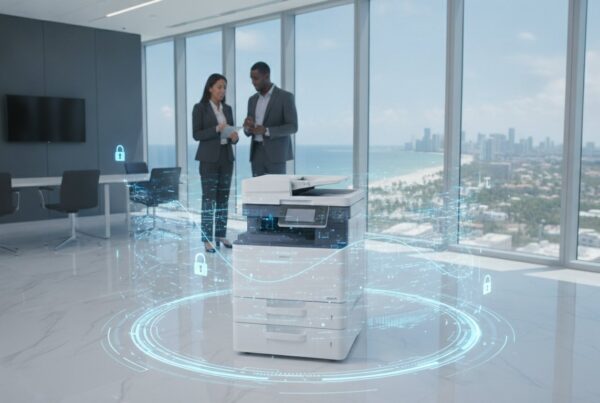
Office equipment is often the forgotten endpoint. Hackers exploit this oversight. They use unsecured printers as persistent gateways to move laterally through a network. Our approach integrates Xerox ConnectKey security with a broader MDR strategy to eliminate these blind spots. We monitor printer traffic for suspicious data exfiltration or unauthorized access attempts in real time.
Leveraging your Xerox technology as a secure component of your network is a strategic advantage. When you define what is managed detection and response (MDR) for your organization, it must include these physical touchpoints. We ensure your Xerox PrimeLink or VersaLink series works for you, not for an intruder. This proactive vigilance allows your team to focus on innovation while we secure the perimeter.
Your Journey to a Secure Digital Future
We don’t believe in transactional IT. We invite you into a collaborative partnership focused on mutual creation. Our relationship is a shared journey toward a frictionless and secure workplace. We provide the technical precision you need, grounded in a human-centric approach that respects your business culture. This modern optimism frames security as a foundation for growth rather than a restrictive cost.
The path to resilience starts with a clear understanding of your current posture. We encourage you to request a comprehensive security and print assessment. This evaluation looks at your entire ecosystem, from your Voip business phones to your Managed Print Services. Together, we can build a strategy that protects your South Florida enterprise from evolving 2026 threats. Join us in creating a secure digital future where your technology is as reliable as your vision.
Building a Resilient Future for Your South Florida Enterprise
The threat landscape in 2026 demands more than just automated alerts. It requires a living, breathing defense strategy. You now understand how the right partnership solves the Miami talent shortage while securing every node on your network. From your cloud servers to your Xerox AltaLink series, every endpoint deserves elite protection. Mastering what is managed detection and response (MDR) is the first step toward transforming your security from a reactive burden into a strategic advantage.
UIQ brings over 30 years of South Florida business expertise to your organization. As an Authorized Xerox Exclusive Agent, we specialize in crafting customized IT strategies for firms across Miami-Dade and Broward counties. We don’t just provide services; we act as your digital architects. Let’s build a secure, frictionless environment together.
Secure your South Florida business with an MDR consultation from UIQ. Your journey toward modern resilience starts with a single collaborative step. We’re ready to design the shield your vision deserves.
Frequently Asked Questions
Is MDR the same as antivirus software?
No, antivirus is a preventative tool while MDR is a comprehensive service. Antivirus relies on signatures to block known threats. MDR uses human intelligence and behavioral analysis to find attackers who have already bypassed your initial walls. It’s the difference between a lock on a door and a 24/7 security guard. Understanding what is managed detection and response (MDR) means looking beyond simple software to find a total security outcome.
How much does MDR cost for a mid-sized business in Miami?
Costs for MDR depend on your specific number of endpoints and the level of monitoring required. Every business has a unique digital footprint that influences the final rate. We recommend requesting a customized security assessment to get an accurate quote for your South Florida operation. This ensures you pay only for the protection you actually need while maintaining a predictable budget.
Does MDR replace my existing IT department or MSP?
MDR doesn’t replace your team; it empowers them. It acts as a specialized extension of your existing IT department or MSP. While your local staff handles daily operations and strategy, the MDR team focuses exclusively on high-level threat hunting. This partnership allows your people to work on growth without being buried by security alerts. It’s a collaborative way to strengthen your posture.
What happens when the MDR team detects a threat at 3:00 AM?
The MDR team takes immediate action to neutralize the threat. They don’t just send an email and wait for you to wake up. They follow pre-defined playbooks to isolate infected devices and stop the attack from spreading across your network. You’ll receive a detailed report in the morning explaining what happened and how we resolved it. This 24/7 vigilance provides true peace of mind.
How long does it take to implement an MDR solution?
Implementation typically follows a structured path over several weeks. We start by deploying sensors across your network and endpoints. Then, our analysts begin a baseline phase to understand your normal traffic patterns. This careful setup ensures that our response is accurate and doesn’t disrupt your legitimate business workflows. We guide you through every step of this journey to ensure a frictionless transition.
Can MDR help my business meet HIPAA or financial compliance?
Yes, MDR is a critical component for meeting modern compliance standards. Regulations like HIPAA and various financial rules require active monitoring and rapid incident response. By documenting every detection and remediation action, MDR provides the audit trail necessary to satisfy regulators and cyber-insurance underwriters. It’s a foundational part of any risk management strategy for regulated industries.
Do I need MDR if my business uses cloud services like Microsoft 365?
Yes, because cloud environments are prime targets for credential theft and data exfiltration. While providers like Microsoft secure the underlying infrastructure, you are responsible for the data and identities within it. MDR monitors your cloud applications to spot unusual login patterns or mass file downloads that indicate a breach. Protecting your cloud assets is just as vital as securing your physical office.
What is the difference between Managed Detection and Response and a SOC?
A Security Operations Center (SOC) is the command center where the work happens. It’s the physical or virtual place where analysts use specialized tools. Managed Detection and Response (MDR) is the specific service delivered by that SOC. When you ask what is managed detection and response (MDR), you’re looking for the expertise and the outcomes produced by that elite team rather than just the facility itself.