
Did you know the average cost of a data breach in the United States has reached a record $10.22 million in 2026? It’s a sobering figure that keeps security professionals awake at night, yet many leaders still view digital defense as a discretionary expense. You understand the urgency, but convincing management to invest in cybersecurity often feels like shouting into a void. It’s exhausting to face budget rejections when you know a single incident could jeopardize everything your team has built.
We agree that the traditional approach to these high-stakes conversations is broken. You shouldn’t have to wait for a crisis to prove your point. This guide will teach you how to translate technical risks into tangible business value that resonates in the boardroom. We’ll explore how to leverage current 2026 trends, like the 20% rise in insurance premiums and new CIRCIA reporting mandates, to build an undeniable case for investment. By the end of this article, you’ll have a strategic blueprint to transform security from a cost center into a powerful driver of brand trust and operational resilience. Let’s start building a more secure future together.
Key Takeaways
- Reframe cybersecurity as a strategic catalyst for growth rather than a recurring business expense.
- Learn a precise financial framework for convincing management to invest in cybersecurity by translating technical risks into clear impacts on revenue and continuity.
- Uncover hidden vulnerabilities within your office infrastructure and explore how Xerox ConnectKey technology safeguards your forgotten endpoints.
- Use our five-step executive pitch guide to present data-driven risk assessments that demand attention and secure leadership buy-in.
- Explore the benefits of a strategic partnership with UIQ for Managed Detection and Response to ensure your organization remains resilient against evolving threats.
The Shift from Cost Center to Business Enabler
Cybersecurity isn’t a tax on your operations. It’s the bedrock of your digital transformation. When we view security as a burden, we limit our potential for growth. In 2026, the “it won’t happen to us” mindset is more than just optimistic; it’s a strategic liability. This outdated perspective ignores the reality that digital resilience is what allows a modern company to scale with confidence. Understanding foundational cybersecurity principles helps leaders see that protection is actually about performance.
The challenge often lies in convincing management to invest in cybersecurity when they still see it through an old lens. Let’s clarify the two perspectives:
- The Cost Center View: A mandatory expense that drains resources. It’s a black hole for budget with no visible return.
- The Business Enabler View: A strategic asset that accelerates revenue. It builds the trust necessary to close enterprise deals faster.
Robust security speeds up client onboarding. It simplifies vendor risk assessments. When your partners see a mature security posture, they move from “maybe” to “yes” with less friction. You aren’t just buying firewalls; you’re buying market velocity.
Overcoming the Normalcy Bias in the Boardroom
Past safety often creates a false sense of security for executives. This is known as normalcy bias. Normalcy bias is the psychological tendency to underestimate the likelihood and impact of a crisis based on the fact that it hasn’t happened yet. In the 2026 threat landscape, this logic is dangerous. Automation and AI have democratized cyberattacks. Every business is now a target by default. Silence from your network doesn’t mean you’re safe; it often means you’re simply next on the list. We must shift the conversation from “if” to “how we respond.”
Cybersecurity as a Competitive Advantage
For firms in South Florida, security is a differentiator. Whether you’re in Miami-Dade or Broward, holding high-level security certifications helps you win bigger contracts. National partners look for local collaborators who won’t become a weak link in their supply chain. Security protects your most valuable asset: your brand reputation. At UIQ, we believe in a human-centric approach to technology. We design security that feels seamless for the end-user. It shouldn’t be a barrier to work; it should be the invisible force that makes creative and technical excellence possible. By convincing management to invest in cybersecurity as a growth tool, you position your organization as a visionary leader in a crowded market.
Translating Cyber Risk into Financial ROI
Numbers drive decisions. When convincing management to invest in cybersecurity, you must pivot from technical jargon to fiscal reality. It’s about comparing the predictable “Cost of Protection” against the volatile, often ruinous “Cost of Breach.” Using resources for building a business case for security helps frame this as a risk management strategy rather than a simple IT request. In 2026, the industrialization of cybercrime through the Ransomware-as-a-Service (RaaS) economy means threats are no longer random. They’re a professionalized business model targeting your revenue stream.
Investment today directly mitigates rising operational costs. Cyber insurance premiums are expected to increase by 15% to 20% in 2026. However, firms with robust, documented security controls often secure better rates and lower deductibles. We help you move from being a high-risk liability to a resilient, insurable asset. This proactive stance is the most effective way to protect your bottom line from the $10.22 million average cost of a U.S. data breach.
Beyond IT, maintaining a healthy bottom line requires meticulous financial oversight. For small business owners, Skyplex Management offers the specialized bookkeeping and accounting services needed to manage these complex budgets and ensure every dollar is working toward your company’s security and success.
The True Cost of a Single Day of Downtime
For businesses in Miami-Dade and Broward, local disruptions can ripple through the entire supply chain. You can calculate the financial impact of a breach using this simple formula: (Lost Revenue + Recovery Costs + Reputation Damage). Lost revenue isn’t just about paused sales; it’s about the total collapse of office productivity. Recovery costs include emergency IT labor and legal fees, which often dwarf the initial ransom demand. Reputation damage is the hardest to recover, as client trust takes years to build but seconds to shatter. Implementing Managed IT Services in Florida ensures your business continuity remains intact even when the local threat environment shifts.
Beyond Fines: The Long-Term ROI of Resilience
A resilient business state is one where technology serves the user without interruption. Managed Detection and Response (MDR) is a cornerstone of this state. It significantly reduces the Mean Time to Detect (MTTD), which currently averages 241 days globally. By catching a threat in minutes rather than months, you avoid the compounding costs of a deep-seated infection. Moving away from the reactive “break-fix” model toward proactive endpoint monitoring creates a stable environment for creative work. Organizations using AI-driven security automation save an average of $1.9 million per breach. This level of efficiency is why convincing management to invest in cybersecurity is the most profitable decision a leader can make. If you’re ready to quantify your specific risk, consider a strategic security assessment to identify your highest-value opportunities for protection.
Identifying Hidden Vulnerabilities in Your Office Infrastructure
Management often focuses on the cloud or the server room. They overlook the device in the hallway. In 2026, hackers are shifting their focus toward IoT and peripheral office devices. These are the forgotten endpoints of your network. A single unsecured printer can act as a silent gateway for a massive data breach. Integrating your print strategy with your overall IT security posture is no longer optional. It’s a fundamental requirement for 2026 resilience. We must stop viewing office equipment as mere utilities and start seeing them as active participants in our digital defense.
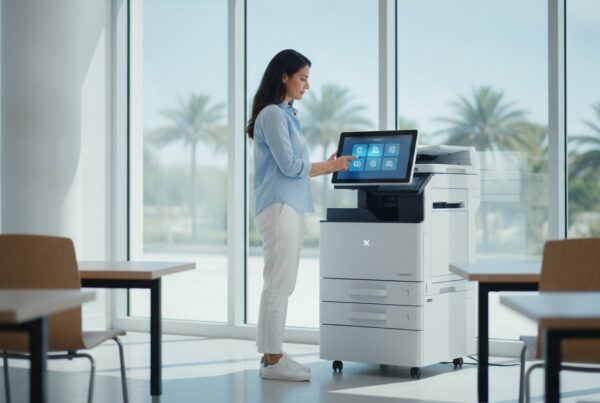
When convincing management to invest in cybersecurity, you must highlight these invisible gaps. Most leaders don’t realize their office equipment holds sensitive data on hard drives or transmits it across the network without encryption. Xerox ConnectKey technology changes this narrative. It turns a standard copier into a smart, secure workplace assistant. It’s about creating a seamless, protected workflow that respects the human experience while maintaining technical rigor. You aren’t just buying hardware; you’re closing a back door to your most valuable data.
Printers as Network Gateways: The Xerox Advantage
The Xerox AltaLink and VersaLink series are built with a security-first philosophy. These devices protect data at the device level through features like BIOS integrity checks and encrypted image overwrite. When you explore a Xerox copier lease Miami, you aren’t just getting a machine; you’re securing an endpoint. Endpoint security is the comprehensive protection of every hardware entry point on your network from external threats and internal misuse. By standardizing on Xerox hardware, you ensure that your “forgotten” devices are actually your strongest defenders. It’s an elegant solution to a complex problem.
South Florida’s Unique Risk Profile
Miami and Broward businesses face a specific set of challenges. Hurricane preparedness often forces teams into sudden remote work environments. This rapid transition creates temporary security gaps that hackers love to exploit. Localized phishing campaigns in 2026 often use regional events or weather alerts as bait to bypass employee caution. Convincing management to invest in cybersecurity means preparing for these inevitable South Florida realities. You need a partner who understands the local landscape. Our Miami Cybersecurity Services provide the specialized support required to protect your firm during storm season and beyond. We help you build a posture that is as resilient as the city itself. Together, we can transform these vulnerabilities into strengths.

A 5-Step Framework for Your Executive Pitch
A successful pitch is a structured narrative. It leads leadership toward a logical, necessary conclusion. Convincing management to invest in cybersecurity succeeds when you stop talking about threats and start talking about outcomes. In 2026, your presentation must be as elegant and efficient as the solutions you propose. Use this five-step blueprint to secure the buy-in your organization deserves.
- Step 1: Start with Business Impact. Don’t lead with firewalls. Lead with revenue and continuity. Explain how a secure infrastructure ensures uninterrupted service delivery and protects the end-user experience.
- Step 2: Present Data-Driven Risk Assessments. Share the “Hard Truth.” Use the specific vulnerabilities identified in your office hardware and cloud endpoints. Data grounds the conversation in reality and removes emotion from the budget request.
- Step 3: Offer a Tiered Solution. Provide options. A “Good-Better-Best” approach gives leadership a sense of control. It moves the conversation from “if we should do this” to “which level of protection fits our goals.”
- Step 4: Highlight the Cost of Inaction. Address the opportunity cost. Mention the rising insurance premiums and the potential loss of high-value contracts that require mature security certifications.
- Step 5: Define Clear Next Steps. End with a partnership invitation. Propose a specific timeline for a pilot program or a comprehensive audit. Make the path forward frictionless.
Speaking the Language of the C-Suite
Executives don’t care about technical jargon like “heuristics” or “packet inspection.” They care about “risk mitigation” and “operational efficiency.” Use short, declarative statements. Professional authority comes from clarity, not complexity. Position Business IT support Miami as a strategic talking point for local market dominance. It’s about being a visionary partner, not just a service provider. We speak the language of growth and stability.
Visualizing the Threat Landscape
Use real-world breach examples from similar industries to create an emotional connection. If a competitor faced a significant outage, share the impact on their brand trust. Keep your presentation design minimalist. A clean, uncluttered aesthetic mirrors an efficient security posture. When the “How much will this cost?” question arises, pivot to value-based answers. Explain how protection preserves the artisanal quality of your digital products and the loyalty of your customers. Convincing management to invest in cybersecurity is about showing them the future they can build on a solid foundation. Connect with our team today to craft a pitch that resonates in the boardroom.
Partnering for Resilience: The UIQ Strategy
UIQ stands as your digital architect. We don’t just provide services; we build foundations for your success. Our team acts as a specialized collective of experts. We are deeply invested in your growth and the safety of your collaborators. When convincing management to invest in cybersecurity, you need a partner who understands both the form and function of your business. We bridge the gap between technical rigor and the human experience. We don’t just sell software; we design resilience.
Managed Detection and Response (MDR) is the heartbeat of our strategy. For firms in South Florida, this means 24/7 vigilance. We don’t wait for a breach to happen. We actively hunt for threats before they manifest. This proactive stance turns your security into a silent, powerful engine of brand trust. It’s an elegant solution for a complex era. It provides the peace of mind your leadership needs to focus on innovation rather than crisis management.
The synergy between Xerox hardware and IT security is where we truly shine. We integrate the Xerox AltaLink and VersaLink series into your broader defense strategy. Your printers are no longer isolated endpoints; they are fortified gateways. This unified approach ensures that your physical office and digital cloud are equally protected. It’s about creating a frictionless experience for your team while maintaining an ironclad posture. We view every challenge as an opportunity for an elegant design solution.
Comprehensive Protection: From Print to Cloud
UIQ bridges the gap between your physical office needs and digital safety. We understand that your workflow starts at the desk and ends in the cloud. Endpoint monitoring is essential for this journey. Our team provides the technical expertise to manage every device on your network. For a broader perspective on how we align technology with your business goals, explore our guide on Navigating IT Support in Miami. We ensure your infrastructure is ready for the specific challenges of 2026.
Your Next Step: A Collaborative Security Assessment
Starting your journey toward resilience should be frictionless. We offer a collaborative security assessment designed to identify your unique risks. Our approach is human-centric. We protect your people and their creative work, not just your data packets. Convincing management to invest in cybersecurity is easier when you have a clear, data-driven roadmap. We provide the clarity you need to move forward with confidence. Let’s design a secure future together. Schedule your strategic IT consultation today and take the first step toward lasting digital peace of mind.
Securing Your Path to Innovation
True digital resilience transforms security from a technical hurdle into a powerful competitive edge. We’ve seen how shifting the narrative toward business enablement and financial ROI creates a compelling case for leadership. By addressing hidden vulnerabilities in office hardware and using a structured pitch, you move from requesting a budget to proposing a strategic investment. Convincing management to invest in cybersecurity is the first step in building a future that prioritizes both human connection and technical excellence.
As an exclusive Xerox Authorized Agent with over 30 years of South Florida expertise, UIQ is uniquely positioned to guide your journey. We specialize in Managed Detection and Response (MDR) to ensure your operations remain uninterrupted. Our team is ready to serve as your digital architect. We provide the clarity and discipline needed to scale safely. Secure your business with a strategic UIQ consultation today. Let’s work together to create a seamless experience that protects your brand and empowers your people. The road to a more secure and optimistic digital future starts with a single collaborative step.
Frequently Asked Questions
How do I explain the ROI of cybersecurity to a non-technical CEO?
Focus on risk mitigation and business continuity rather than technical specifications. Contrast the predictable cost of protection against the $10.22 million average cost of a data breach in the United States. Explain that robust security is a growth enabler that builds client trust and speeds up vendor onboarding. When convincing management to invest in cybersecurity, frame it as an insurance policy for your brand’s reputation and revenue stream.
What is the biggest cybersecurity mistake small businesses in Miami make?
The most common error is underestimating local threats and failing to secure hardware endpoints. Many South Florida firms assume their size makes them invisible to hackers. This ignores the reality that automation makes every business a target. Additionally, companies often fail to prepare for the security gaps created during rapid remote work transitions during hurricane season. Resilience requires a strategy that covers both digital and physical office infrastructure.
Are Xerox printers really a security risk for my company network?
Any unsecured device on your network is a potential entry point, but Xerox hardware is designed to be a defender. The Xerox AltaLink and VersaLink series include built-in security features like BIOS integrity checks and encrypted image overwrite. These devices turn “forgotten endpoints” into active participants in your defense strategy. By standardizing on secure hardware, you close a common back door to your most sensitive data.
How often should we update our cybersecurity strategy in 2026?
You should review your security strategy quarterly to keep pace with the rapidly evolving threat landscape. The 2026 environment is defined by professionalized Ransomware-as-a-Service economies and new regulatory requirements. Regular updates ensure your firm remains compliant with mandates like the CIRCIA 72-hour incident reporting rule. A living strategy allows you to adapt to new vulnerabilities before they can be exploited by automated attack tools.
Can managed IT services actually save my business money in the long run?
What is the difference between basic antivirus and Managed Detection and Response (MDR)?
Basic antivirus is a reactive tool that looks for known signatures, while MDR is a proactive service involving 24/7 monitoring. MDR uses specialized experts to hunt for stealthy threats that bypass traditional software. It focuses on reducing the global average detection time of 241 days to just a few minutes. This rapid response is what prevents a minor intrusion from becoming a multi-million dollar disaster for your organization.
Is it better to hire in-house IT or use a managed service provider in South Florida?
A managed service provider offers a broader range of expertise and 24/7 coverage that a small in-house team cannot easily match. The current cybersecurity talent crisis makes recruiting specialized experts both difficult and expensive for individual firms. Convincing management to invest in cybersecurity is often more successful when you demonstrate the cost-efficiency of a specialized collective. You gain immediate access to high-level strategic planning and advanced defense tools.
How does cybersecurity impact my business insurance premiums?
Strong security controls are now the primary factor in determining your cyber insurance rates. Premiums are expected to rise by up to 20% in 2026, and insurers are becoming more selective about whom they cover. Documented Managed Detection and Response (MDR) and endpoint management make your firm a lower risk for providers. Robust protection moves your company from a high-risk liability to a resilient, insurable asset that commands better terms.